
India correspondent
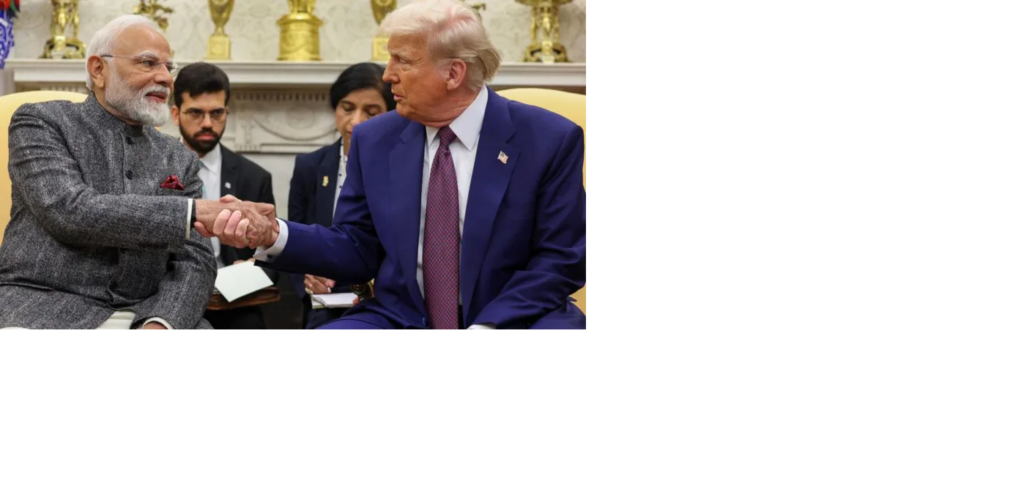
Ahead of PM Modi’s meeting with Trump in February, India cut tariffs on some US products
India has usually turned to economic reforms in times of distress, with the most famous example being 1991, when the country embraced liberalisation in the face of a deep financial crisis.
Now, with US President Donald Trump’s tit-for-tat tariff wars and the global trade upheaval that has followed, many believe that India finds itself at another crossroad.
Could this be a major opportunity for the world’s fifth largest economy to shed its protectionism and further open up its economy? Will India seize the moment, just as it did more than three decades ago, or will it retreat further?
Trump has repeatedly branded India a “tariff king” and a “big abuser” of trade ties. The problem is that India’s trade-weighted import duties – the average duty rate per imported product – are among the highest in the world. The US average tariff is 2.2%, China’s is 3% and Japan’s is 1.7%. India’s stands at a whopping 12%, according to data from the World Trade Organization.
High tariffs increase costs for companies dependent on global value chains, hindering their ability to compete in international markets. They also mean that Indians pay more on imported goods than foreign consumers. Despite growing exports – primarily driven by services – India runs a significant trade deficit. However, with India’s share of global exports at a mere 1.5%, the challenge becomes even more urgent.
The jury is out on whether Trump’s tariff war will help India break free or double down on protectionism. Narendra Modi’s government, often criticised for its protectionist stance, seems to have shifted gears in recent years.
Despite growing exports, India runs a significant trade deficit
Last month, ahead of Prime Minister Modi’s meeting with Trump in Washington, India unilaterally lowered tariffs on Bourbon whiskey, motorcycles and some other US products.
With India’s tariffs already higher than those of most countries, further increases could be especially damaging.
“We need to boost exports and a tit-for-tat tariff war won’t help us. China can afford this strategy due to its massive export base, but we can’t, as we hold only a small share of the global market,” Rajeshwari Sengupta, an associate professor of economics at Mumbai-based Indira Gandhi Institute of Development Research, said. “A trade conflict could hurt us more than others.”
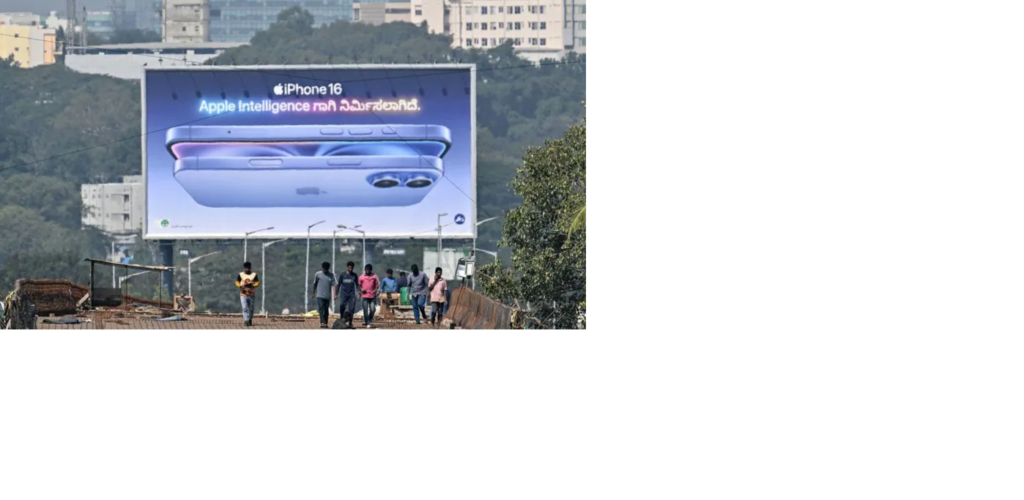
High tariffs mean Indians pay more on imported goods than foreign consumersa
n light of this, India finds itself at a crossroad. As the world undergoes a major shift, India has a “unique opportunity to shape a new vision” for global trade, says Aseema Sinha, a trade expert at Claremont McKenna College.
By lowering protectionist barriers in South Asia and strengthening ties with Southeast Asia and the Middle East, India has the chance to lead in shaping a new trade vision, positioning itself as a key player in a “re-globalised” world, Ms Sinha, author of Globalising India, says.
India’s challenge isn’t in expanding its thriving service sector, which already makes up nearly half of total exports, but in dealing with the large pool of unskilled workers who lack the basic skills needed for service jobs.
“While high-end services are thriving, the majority of the workforce remains uneducated and underemployed, often relegated to construction or informal jobs. To provide meaningful employment to millions entering the workforce each year, India must ramp up its manufacturing exports, as relying solely on services won’t address the needs of the unskilled labour force,” says Ms Sengupta.
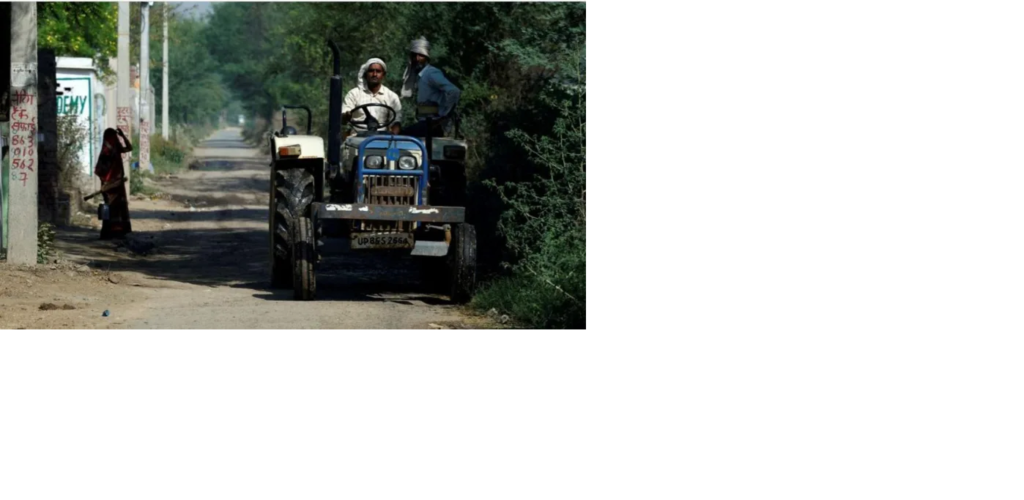
Agriculture, which makes up only 15% of India’s GDP, accounts for 40% of employment
One concern is that reducing tariffs could lead to dumping, where foreign companies flood the market with cheap goods, potentially harming domestic industries.
According to Ms Sengupta, India’s ideal approach to trade would involve a “universal reduction” in import tariffs, as it currently has some of the highest tariffs among its trading partners.
However, there is a caveat: China’s trade struggles, particularly with the US due to the ongoing trade war, could lead to Chinese dumping in India in the “short run”.
“To protect against this, India can use non-tariff barriers against China but only against this one country and only in cases of proven dumping. Barring that, it is in India’s interest to do a wholesale slashing of tariffs,” she says.
There’s also a growing concern that India may be overcompensating in its efforts to flatter the US.
The broader consensus seems to be that India should capitalise on what could be the unintended consequences of Trump’s tariff wars. Pranjul Bhandari, chief India economist at HSBC, believes that “potential US tariffs may have become a catalyst for reforms.”.
“If supply chains are rejigged again during the second Trump presidency due to higher tariffs on large exporters, and the world looks for new producers, India may get a second chance,” she writes.
Creating jobs that manufacture goods for the world won’t be easy. India has largely missed the bus on low-end, unskilled factory work – jobs China dominated for decades. Automation is taking over. Without deeper reforms, India risks being left behind.