
Trump updates: New tariffs announced, India’s Modi visits the White House

Prime Minister Narendra Modi is keen to avoid any further slowdown in the economy, which is already growing at its weakest pace since the pandemic. To head off a potential trade war with its biggest trading partner, New Delhi has delivered a rapid series of concessions to the White House on issues core to Trump’s agenda. That process is likely to continue in the coming months, officials signalled this week.
In Short
- Trump announces reciprocal tariffs targeting high-duty countries
- India faces impact due to high tariffs on American goods
- Tariffs could affect sectors like textiles, pharmaceuticals, automobiles
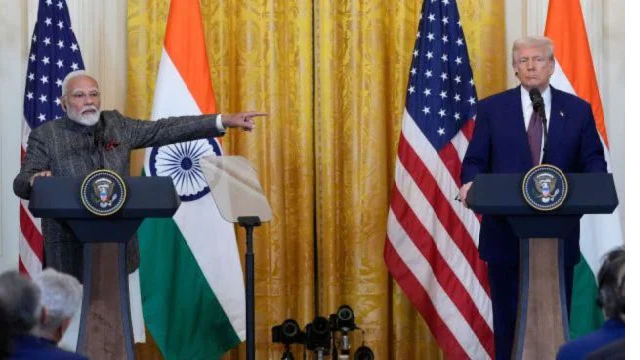
US President Donald Trump, just hours before his scheduled meeting with Prime Minister Narendra Modi, announced the imposition of reciprocal tariffs, targeting countries that levy high duties on American imports. Given India’s historically high tariffs on US goods, it is expected to be among the nations most affected by Trump’s decision.
- Trump has made it clear that the US will now charge the same level of tariffs on imported goods as other countries impose on American exports.
Written by Saptarshi Basak
The highly anticipated report from the UN Office of the High Commissioner for Human Rights (OHCHR), released earlier this week, has garnered significant attention in the Bangladeshi media, while Pakistani media has primarily focused on India-US discussions and the Turkish president’s visit to Islamabad.
The tariff increases would be customized for each country with the partial goal of starting trade new negotiations. But other nations might also feel the need to respond with their own tariff increases on American goods. As a result, Trump may need to find ways of assuring consumers and businesses that growth to counteract any uncertainty from the possible fallouts from his tariffs.
US President Donald Trump on Friday said that Indian tariffs as high as 70 per cent and more on American goods such as cars, which limit access to the Indian market, are a “big problem” and that US sales of oil and gas will bridge the US trade deficit with India.
Trump further stated that India and the US have reached an important agreement on energy that will restore the United States as a leading supplier of oil and gas to India.
“India is also reforming its laws to welcome the US to nuclear technology at the highest level into the Indian market. This will bring safe, clean and affordable electricity to millions of Indians and tens of billions of dollars to the US civilian nuclear industry in India,” he said.
Notably, US motorcycle exports to India stood at $3 million in FY2024, and this tariff cut could help expand market access for American manufacturers, according to the think tank Global Trade and Research Institute (GTRI).
India faces losses up to $7 billion a year over Trump’s reciprocal tariff threat: CitiGroup | Know which sectors are at risk?
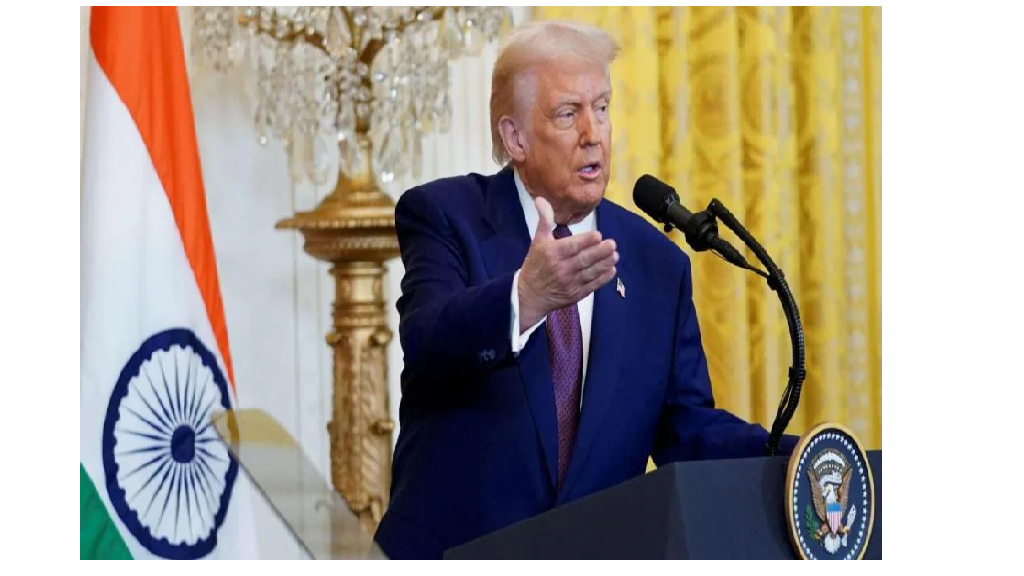
US President Donald Trump’s threat to implement reciprocal tariffs starting in early April is raising concerns across India’s export sectors, from automobiles to agriculture. According to Citi Research analysts, potential annual losses could reach up to $7 billion.
Government officials, still awaiting details on how the tariffs will be calculated, are preparing countermeasures and working on a proposal for a trade deal with the US aimed at reducing tariffs and enhancing two-way trade. Lets explore the key impacts of reciprocal tariffs on India in this article.
Hours before Indian Prime Minister Narendra Modi’s visit to the White House, President Donald Trump announced that the United States would levy reciprocal tariffs on its trading partners.
Moreover, any economic boost will be a short-term measure while the problems it seeks to address “are more fundamental”, warns Alexandra Hermann, lead economist at Oxford Economics. “There is nothing [in the budget] that addresses employment or skilling,” that will lead to broader and more sustained growth, she says. Just about 2 percent of Indians currently pay income tax and unemployment and underemployment have stayed high, she says.
The government has said it expects a growth rate of about 6.7 percent for the year ahead, indicating strong growth in the current global landscape. But ANZ’s Nim says the “bigger concern should be growing per capita income and better distribution of that income so it reaches people who need it.”

- US President Donald Trump has welcomed Indian Prime Minister Narendra Modi to the White House for bilateral discussions about trade and security.
- Trump has signed a memorandum directing his advisers to calculate reciprocal tariffs on foreign countries, but offered few concrete details on the plan.